


From Muse to Aqours: The 2.5D Idol Phenomenon and the Legacy of Hatsune Miku

The Japanese Idol landscape has evolved dramatically. Today, stars are neither solely human nor entirely digital. The massive success of franchises like Love Live! is based on the 2.5D model, a fusion of animated characters and their real-life voice actresses.
This formula would not have been possible without the precedent set by the pioneering figure of digital entertainment: Hatsune Miku.
I. The Legacy of Hatsune Miku: The Pure Virtual Idol
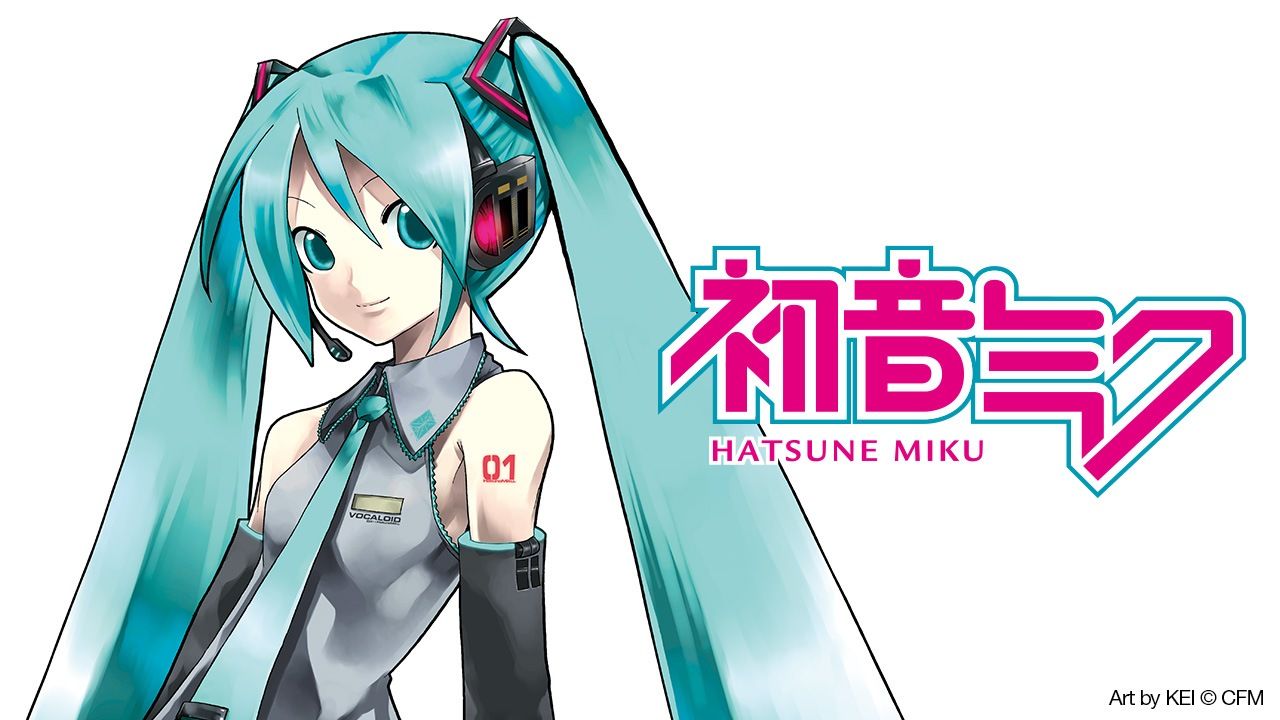
Hatsune Miku (2007) is not a 2.5D Idol, but a Pure Virtual Idol. She proved that a character and her voice (created by the Vocaloid software) could generate a massive global fandom, with a unique relationship with her followers.
-
Focus on Fan-Generated Content: Miku established the concept that the Idol belongs to the fandom. Her music, clothing, and success are driven by the users themselves who create her songs.
-
Technological Innovation: Her concerts, which use high-tech holograms or 3D projections, prepared the audience to accept the idea that a fictional character can be a star on a real stage.
-
Open Model: Her brand proved that the barrier between creator and consumer could be eliminated, a crucial concept that Love Live! would adapt.
II. The Birth of the 2.5D Idol Phenomenon
The 2.5D model is the combination of "2D" (animation) and "3D" (real-life voice actresses). Love Live! is the quintessential example of this strategy.
Key Components of the 2.5D Model (Descriptive List):
-
Animated Character (2D): The series' plot unfolds in the anime, creating the group's personality, emotional bonds, and backstory (μ's, Aqours, Liella!).
-
Voice Actresses (3D/Reality): The actresses who bring the characters to life not only sing but also act, give interviews, and crucially, perform live concerts dressed as their characters.
-
Fandom Interaction: The audience votes in popularity contests, chooses the center members (the central Idol in the group), or decides the name of the sub-units, integrating Miku's open source dynamic.
III. The Narrative Evolution of Love Live!
The franchise has avoided stagnation by restructuring the dynamic of its core groups in each new generation.
A. μ's (Muse - School Idol Project)
-
Central Concept: "Saving the school." The group forms out of necessity and fights adversity to prevent their school from closing, uniting nine disparate girls under a common goal.
-
Dynamics: Heavily focused on teamwork and establishing the initial formula.
-
Legacy: They created the modern archetype of the School Idols.

B. Aqours (Sunshine!!)
-
Central Concept: "Failure and Overcoming." The group accepts that they may never equal the previous generation (μ's). The narrative is more about rural frustration, the search for identity, and accepting mistakes.
-
Dynamics: More complex relationships and a narrative closer to real life.
-
Legacy: They proved that the franchise could sustain itself on new characters without relying on nostalgia.
C. Nijigasaki High School Idol Club (Current)
-
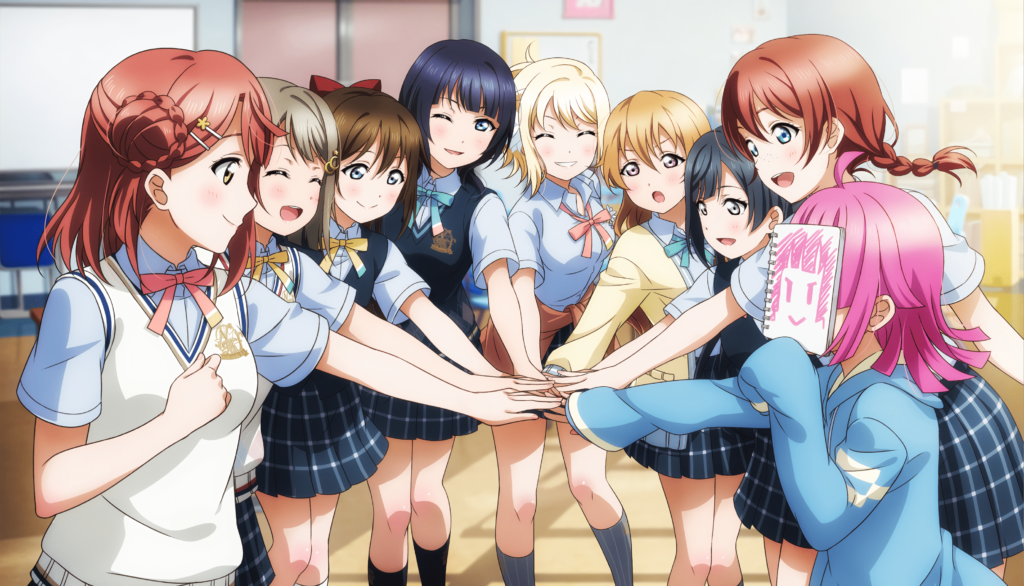
Central Concept: "Solo Idols." Breaks the nine-member team model by focusing on Individual Idols who compete and collaborate, but without merging into one mandatory unit.
-
Dynamics: Allows for deeper narratives about individual ambition and different ways to support peers.
-
Legacy: Expands the boundaries of the 2.5D Idol towards individual self-expression.
IV. Conclusion
Hatsune Miku proved that audiences love digital characters. Love Live! took that lesson and added the human touch through 2.5D. This combination has created an incredibly lucrative and enduring business and entertainment model, where the line between drawing and reality is increasingly blurred on stage.
Sponsored
Categories
Read More
The Rise of Webtoons: How 'Solo Leveling' and 'Tower of God' Are Changing the Anime Landscape For decades, the anime industry operated on a predictable model: most series were adaptations of manga (Japanese comics), light novels, or occasionally, video games. The origin of almost all intellectual property was Japanese. That model is changing. The success of series like Tower of God and,...
Any anime fan knows the terms “Shonen” (for young boys) and “Shojo” (for young girls). Many are familiar with “Seinen” (for adult men). But there’s a fourth crucial pillar that, in the West, is often overlooked or misunderstood: “Josei.” Josei is the demographic aimed at adult women. It is not Shojo. It is the medium that produces some of...

Filler vs. Canon: A Beginner's Guide to Understanding Anime Arcs (and Which to Skip) You're watching a long-running action anime, like Naruto. The main plot is intense; the characters are in the middle of crucial training or a life-or-death battle. Suddenly, the next episode begins, and the main characters are on an unimportant side mission, like helping a talking ostrich or cooking the...

Anime is a fantastic tool for immersion in the Japanese language. Although the dialogues are often dramatic or exaggerated, there is a core of words and phrases that are repeated in almost every series. Hearing these terms repeatedly not only helps you with pronunciation but also teaches you the cultural context of their use. Here are 10 essential words and phrases guaranteed to speed up your...
All For One (AFO) is the fundamental antagonist of My Hero Academia and the symbolic opposite of hero society. His psychology is not based on trauma or vengeance, but on malignant narcissism fueled by a power that allows him to absorb the identity of others. AFO is the embodiment of absolute tyranny, where power is the ultimate end, not the means. 1. The Narcissistic Core (Worldview) ...