







Dark fantasy in anime often falls into a recurring trap: using excessive violence and protagonist suffering as mere aesthetic ornaments to mask empty writing. Fortunately, Yuusha-kei ni Shosu: Choubatsu Yuusha 9004-tai Keimu Kiroku (known in the West as Sentenced to Be a Hero) dodges this trope with surprising agility. Far from wallowing in gratuitous tragedy, the series presents a world pushed to the limit, where morality has been replaced by religious fanaticism and political convenience.
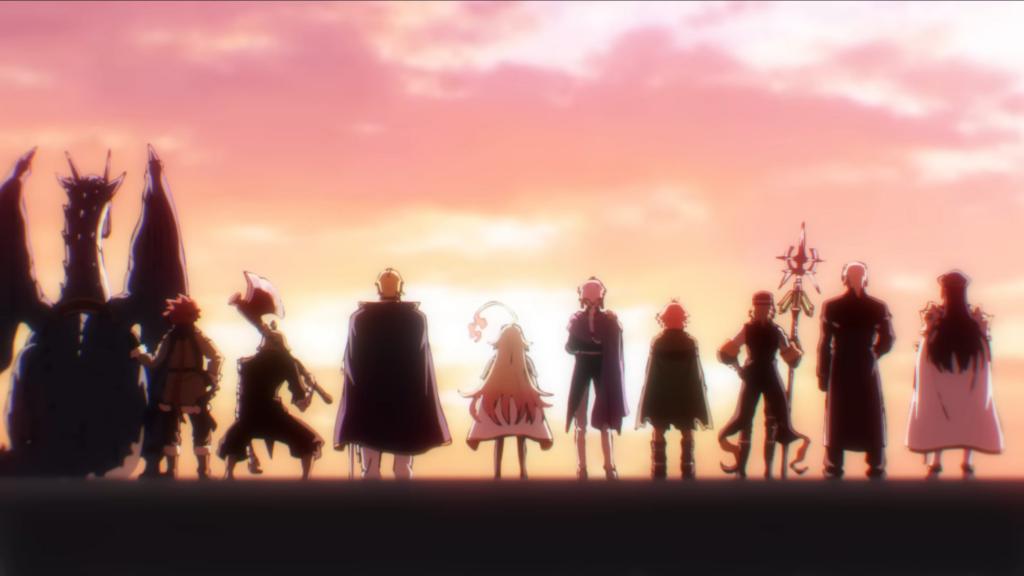
The one-hour premiere laid the groundwork for a dense narrative. Here, the title of “Hero” is not an honor, but the worst possible condemnation. It is a punishment given to the most atrocious criminals, who are forced to fight the Demonic Blight by resurrecting over and over again in an agonizing cycle. It is a fascinating concept that, while resonating with works like 86: Eighty-Six for its treatment of disposable individuals on the battlefield, manages to find its own audiovisual and thematic identity.
A Nordic-Inspired World That Suffocates and Marvels
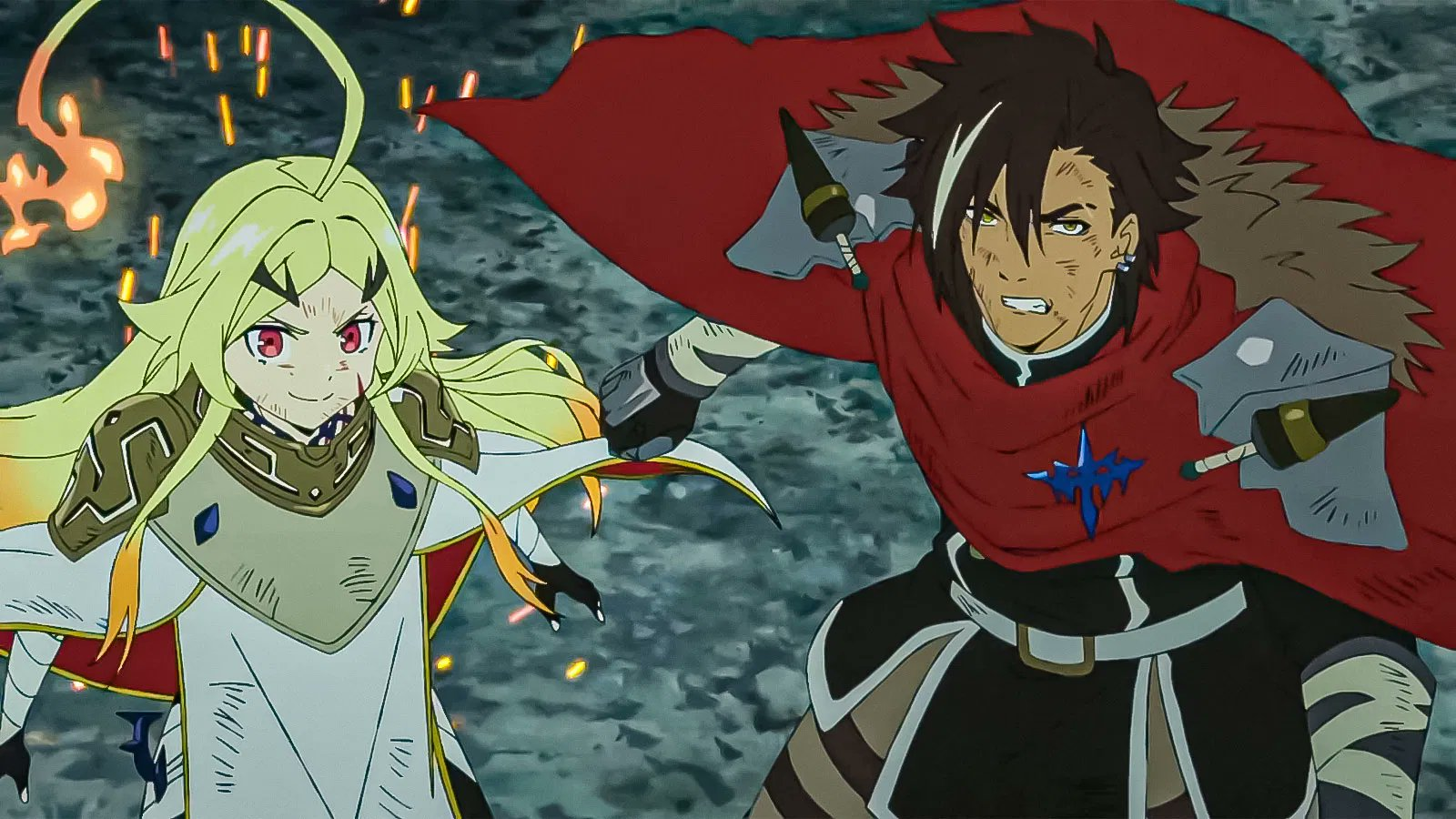
The work of director Hiroyuki Takashima and Studio KAI deserves detailed analysis, especially because they decided to ignore current trends of overloaded design. Takashima, who brings experience from visually dynamic productions like Cyberpunk: Edgerunners and Mobile Suit Gundam: The Witch from Mercury, opts for the kagenashi technique (animation with minimal shading). This is a brilliant technical decision that sacrifices static details to prioritize spectacular kinetic fluidity during combat. When the action erupts, the camera uses first-person angles that not only show the scale of destruction but place you directly in the mud and blood of war.
Behind this visual impact is the character design by Takeshi Noda. The protagonists’ clothing reflects their backgrounds, combining military functionality with aesthetic details that make them unique without clashing with the cold, Nordic-inspired landscapes and dense mountains of the environment.
The Weight of the Voices and Sound Design
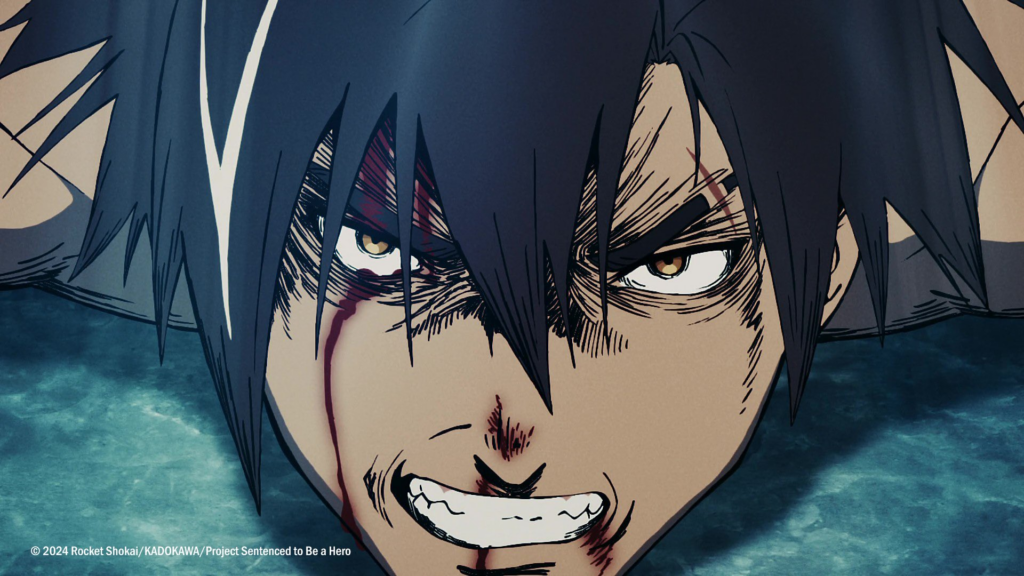
A department that significantly elevates Sentenced to Be a Hero is the casting direction. Yōhei Azakami (widely recognized for his work in Hell’s Paradise) takes on the role of Xylo Forbartz. His performance gives the protagonist a raspy, deeply exhausted vocal texture; he comes across as a man who understands the flaws of his system and fights without glorifying his own pain.
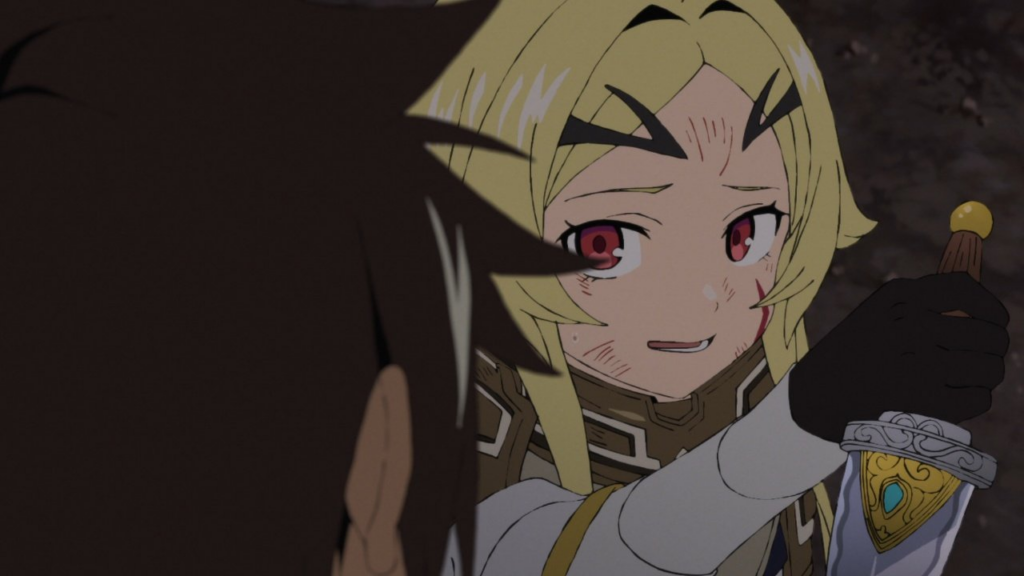
This roughness contrasts exquisitely with voice actress Mayu Iizuka (from the Cue! franchise), who brings Teoritta to life. Iizuka captures a childlike purity that demands constant validation to unleash her massive destructive power, all without making the character unbearable. Adding to this duo is the talent of Shizuka Ishigami as Patausche Kivia, whose voice brings an undeniable military fierceness, reflecting the internal conflict of a commander caught between duty to her nation and the respect she begins to feel for the repudiated “heroes”. Furthermore, the sound design does not skimp on subtle details, masterfully integrating epic choirs during the climaxes of battles.
Beyond the Antihero: Deconstructing Xylo and Teoritta
Much of the specialized critique has praised how the series deconstructs the institutions of its own universe. The script, handled by Kenta Ihara (Saga of Tanya the Evil), is brilliant at showing us a broken sociopolitical world. The Holy Knights are not useless because the plot needs to make Xylo shine; they are ineffective because they represent a society that values symbolic purity and dogma over tactical results.
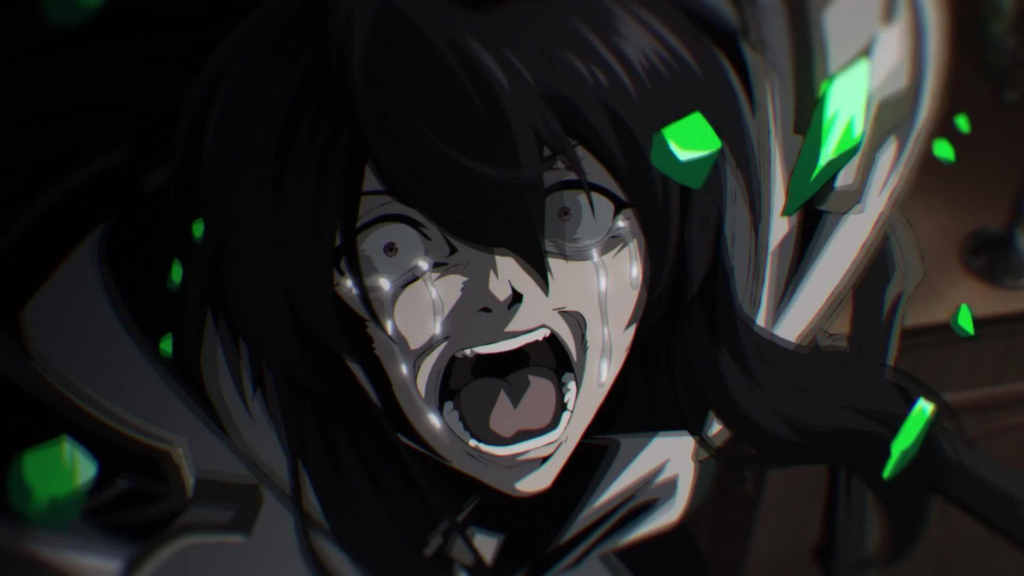
Xylo understands the macabre rules of this game. His cynicism is not a teenage whim, but a psychological armor. He refuses to use Teoritta’s powers at the beginning, not out of stubbornness, but due to the latent trauma of having to mercy-kill his previous goddess, Senerva, whom he saw as a filial figure before she succumbed to corruption. This type of writing humanizes characters who, in less capable hands, would have been mere plastic archetypes.
The Cracks in the Armor
No work is perfect, and the narrative pacing of this adaptation suffers some stumbles. After the masterful first episode, the series experiences a noticeable structural lethargy in its initial chapters. At specific moments, the plot adopts a repetitive mission format that slows down the horizontal development of the political conspiracy.
Likewise, although the design of the Demon Lords is grotesquely creative—combining insects or flora with purulent tumors—the excessive use of repetitive CGI for the minor “fairy” demons can feel lackluster compared to the excellence of the 2D art.
It stems from his own personal trauma. Xylo developed a paternal bond with his previous goddess, Senerva, and had to give her a merciful end when she exhausted her powers and succumbed to the corruption of the Demonic Blight. He resists forming an early pact with Teoritta to avoid repeating that same tragedy.
The surprising final twist reveals that the enigmatic Rhyno is, in fact, a Demon Lord. However, he is not infiltrating to destroy humanity; he allied with humans because, ironically, he is a psychopath who enjoys hunting and killing other demons, finding that the brutality of the human system perfectly fits his bloodlust.
For those looking for an adventure that challenges ethical expectations without neglecting tactical and visual spectacle, this proposal is a mandatory stop in the current catalog. Take the time to overcome the slight pacing dip after the premiere; the depth of its conspiracies will reward you handsomely. We invite you to join the 9004th Squad and discover if there is any light at the end of this frozen purgatory.







Awesome!
thanks to this review i really feel like watching this anime
I’d seen some negative comments before, but this is such a solid review
I had read bad comments before, but this is a great analysis
Very fascinating concept and awesome to hear so many amazing people involved in this one. I’ll definitely be watching.
I will definitely watch it