


7 Key Anime That Underperformed in Japan but Were Global Successes

The success of an anime in Japan is historically measured by Blu-ray/DVD sales and broadcast ratings. Global success, however, is measured by international licensing, streaming sales, and long-term cultural influence. The seven series below are primary examples of how low domestic reception was offset by an explosion of popularity in the West.
1. The Adult Swim Phenomenon (The Ratings Failure)
These anime benefited from the programming and support of Cartoon Network in the United States (Adult Swim), which provided the foundation for their cult status.
1. Cowboy Bebop (1998)
Cowboy Bebop's performance in Japan was disappointing, with low BD/DVD sales and an incomplete initial broadcast due to censorship. Its massive success was consolidated in the West, especially after its full broadcast on Adult Swim in 2001. Its genre fusion (western, noir, sci-fi) resonated strongly with American audiences, making it a foundational masterpiece for many Western viewers.

2. FLCL (Fooly Cooly) (2000)
This 6-episode OVA series had a limited impact in Japan upon release. Globally, FLCL became a cult property thanks to its repetition on Adult Swim, which captured a generation of viewers. Its surreal style and experimental animation established it as a benchmark for "different animation" for the Western audience.

2. The Sci-Fi and Niche Cult Explosion
These series, featuring complex philosophical themes and dense narratives, failed to achieve Japanese commercial success but found a devoted audience abroad.
3. Ergo Proxy (2006)
A dystopian sci-fi series with low profitability in Japan, often cited for its slow pace and philosophical references. In the West, Ergo Proxy was praised for its thematic depth (existentialism, consciousness) and cyberpunk aesthetic. It was a success in international licensing and streaming.

4. Darker than Black (2007)
Despite its production quality, Darker than Black's BD sales were modest in Japan. Its dark-toned spy and superpower narrative with an anti-hero protagonist fit perfectly into the Western market, where it was successfully distributed and promoted by Funimation and other streaming platforms.

3. The Watanabe Case and Style
Series directed by Shinichiro Watanabe often find their greatest acclaim and commercial success abroad due to their strong Western influence (music, composition).
5. Samurai Champloo (2004)
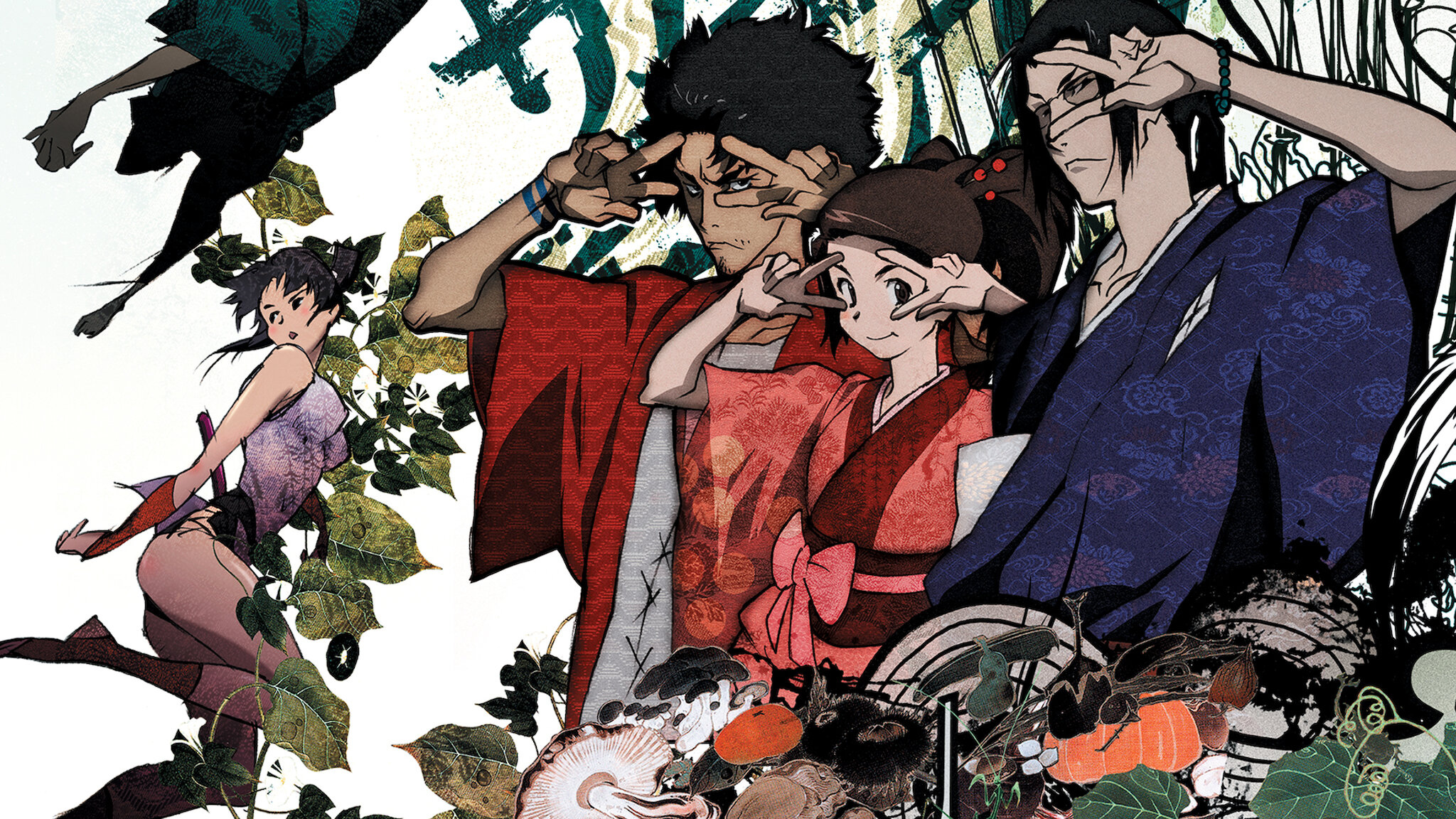
Like Bebop, Samurai Champloo had lower-than-expected BD sales performance in Japan. However, its mix of samurai action and hip-hop culture, coupled with strong distribution in North America and Europe, cemented its status as a global hit and one of the most accessible series for new viewers.
6. Space Dandy (2014)
Strategically designed and broadcast, Space Dandy premiered first on Adult Swim's Toonami block before its Japanese broadcast. Although this was part of its strategy, its physical sales in Japan were low. Its absurdist humor and high-caliber animation were immediately embraced by the Western audience, which was already familiar with the director's style.

4. Platform-Based Success
7. Death Note (2006)
Although Death Note was a moderate success in Japan, its global explosion was disproportionate. It was one of the first series to benefit from legal streaming distribution (Viz Media) and file-sharing, becoming a meme-level cultural phenomenon and the introductory anime for millions of new fans outside of Asia. Its global impact dwarfed its already decent Japanese success.

Conclusion
Low domestic disk sales are not always an indicator of creative failure. These series demonstrate that the influence of Western genres, robust international distribution, and the power of streaming can grant masterpiece status to anime that the Japanese consumer base originally overlooked.
Sponsored
Categories
Read More
The anime industry is a global phenomenon that generates billions of dollars through streaming, merchandising, and box office sales. However, behind this success lies an economic paradox: most of the artists who create these global hit products are remunerated with historically low wages and often work under precarious conditions. An animator's salary in Japan depends drastically on their...

The 80s and 90s were the Golden Age of Cyberpunk, a period where anime fearlessly explored the fear of technology, the omnipresence of corporations, and the merging of the human body with machines. While Akira and Ghost in the Shell are the fundamental pillars, a handful of lesser-known OVAs and films captured the essence of the genre with equal intensity, defining the neon and dystopian...

The Isekai (異世界, "another world") genre is the undisputed king of modern anime. Its premise—a protagonist is transported or reincarnated into a fantasy world—offers limitless escapism. However, its success has led to market saturation, where most series repeat a formula that now feels exhausted. I. Why Does the Isekai Formula Feel Saturated? The rapid production of Isekai relies on...

Is 'Demon Slayer: Kimetsu no Yaiba' Overrated? A Fair Look Demon Slayer: Kimetsu no Yaiba is, objectively, one of the biggest entertainment phenomena in recent history. It broke manga records, its film (Mugen Train) became the highest-grossing anime movie of all time, and every season is a global event. But with this level of stratospheric success, the word inevitably comes up:...
Anime is a fantastic tool for immersion in the Japanese language. Although the dialogues are often dramatic or exaggerated, there is a core of words and phrases that are repeated in almost every series. Hearing these terms repeatedly not only helps you with pronunciation but also teaches you the cultural context of their use. Here are 10 essential words and phrases guaranteed to speed up your...