
The Rise of Webtoons: How 'Solo Leveling' & 'Tower of God' Are Changing Anime
The Rise of Webtoons: How 'Solo Leveling' and 'Tower of God' Are Changing the Anime Landscape
For decades, the anime industry operated on a predictable model: most series were adaptations of manga (Japanese comics), light novels, or occasionally, video games. The origin of almost all intellectual property was Japanese.
That model is changing.
The success of series like Tower of God and, more recently, the global phenomenon Solo Leveling, marks a fundamental shift. These series are not manga adaptations. They are adaptations of Webtoons, a digital comic format from South Korea.
This boom is not a coincidence; it is an industry realignment. Let's analyze what webtoons are and how they are altering the future of anime.
What Exactly Is a "Webtoon"?

The term "Webtoon" (or manhwa, the Korean term for comics) refers to digital comics originating in South Korea. They differ from traditional Japanese manga in three key ways:
-
Format: They are not designed for a printed page. They are designed to be read on a smartphone. The format is an infinite vertical scroll, rather than page-by-page panels.
-
Color: Unlike manga (which is almost always black and white), webtoons are published in full color from the start.
-
Accessibility: They are distributed digitally on global platforms like Webtoon, Tapas, and Tappytoon, amassing millions of readers before any adaptation is announced.
The Turning Point: From 'Tower of God' to 'Solo Leveling'
While there have been manhwa adaptations before, the modern movement began in earnest with a handful of key titles.
1. The Pioneer: 'Tower of God'

The 2020 adaptation of Tower of God was a direct collaboration with the Crunchyroll platform under its "Crunchyroll Originals" banner. It was a high-profile experiment.
-
The Impact: It proved there was a massive, pre-existing global audience for these properties. Fans of the webtoon had waited years for an adaptation, and new fans were drawn to its unique world-building. The success of Tower of God (along with others like The God of High School) served as a proof-of-concept for Japanese investors.
2. The Explosion: 'Solo Leveling'

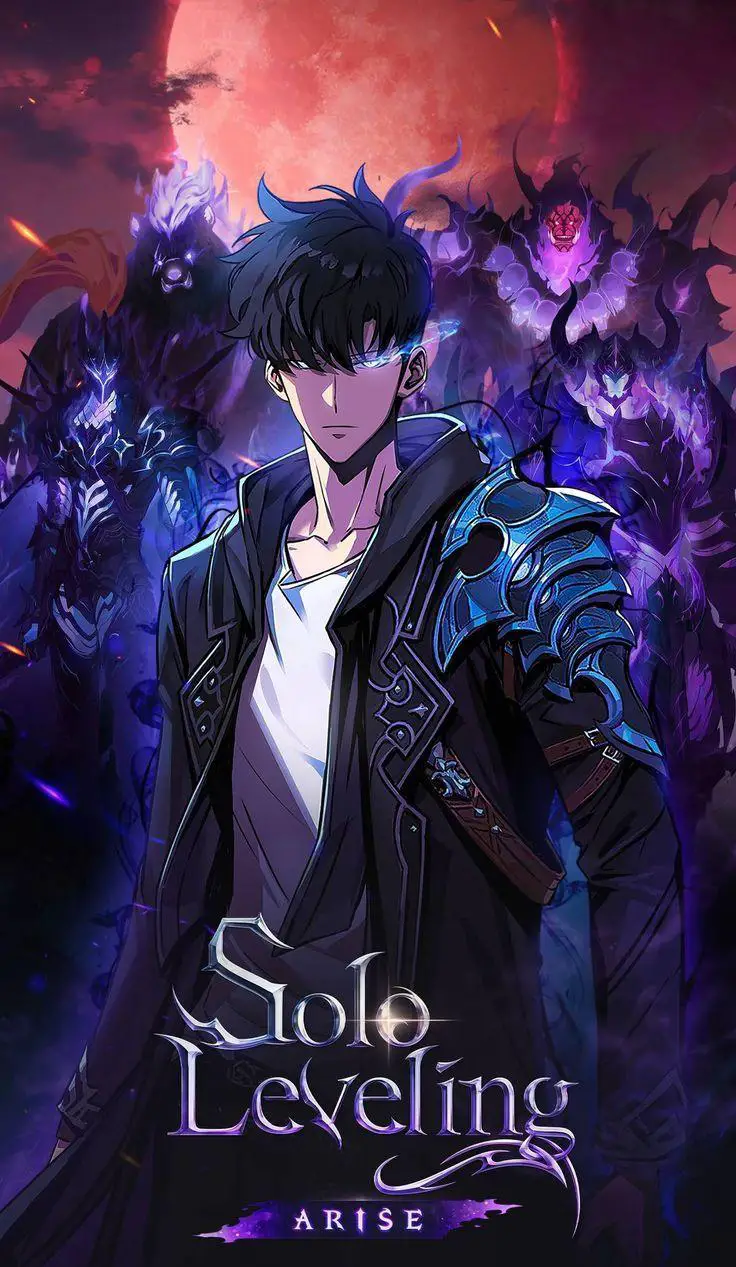
If Tower of God was the proof, Solo Leveling was the confirmation. The 2024 adaptation was treated as a top-tier anime event from the start, with an elite Japanese studio (A-1 Pictures) and a renowned composer (Hiroyuki Sawano).
-
The Impact: Solo Leveling wasn't just popular; it was a massive commercial hit that dominated online discussion globally. It proved that a Korean property, if given a top-tier budget and production team, could compete with and even surpass Japan's biggest manga franchises.
How Are Webtoons Changing Anime?
This is not a passing trend. It is a shift in the content pipeline for several factual reasons:
-
Reduced Financial Risk: The biggest problem for an anime production committee is risk: will people like this? Popular webtoons eliminate this risk. Titles like Solo Leveling already had hundreds of millions of reads globally. The audience was confirmed before the first frame was animated.
-
Content Diversification: The Japanese manga industry is saturated with certain genres (like Isekai). Korean webtoons bring different stories, often darker, with adult protagonists and power systems (like Solo Leveling's "game" system) that feel distinct from traditional Shonen.
-
A New IP Market: Japan is no longer the only source of IP for anime studios. South Korea has established itself as a provider of proven, successful stories. We are seeing this with the announcement of adaptations for other massive webtoons like Omniscient Reader's Viewpoint.
-
Aesthetic Influence: Webtoons are in color and often feature high-impact panels designed to impress on a screen. This sets a very high visual expectation that anime studios strive to match, resulting in high-quality action animation.
Conclusion
"Anime" as an art form remains centered in Japan, but the intellectual property (IP) it adapts has gone international. Solo Leveling and Tower of God are not just "Korean series"; they are the flagships of a new era.
They proved that the global audience does not care about a story's country of origin, only its quality. As a result, the door is now open, and the anime industry—always hungry for proven success stories—has found a new, rich source of content in the webtoon.
Sponsored
Categories
Read More
A Beginner's Guide: 10 Recommended Anime Series to Start With Anime is an animation medium originating from Japan. It contains a vast number of works covering multiple genres, such as action, science fiction, romance, and comedy. This wide variety of options can be difficult for a new viewer to navigate. If you are new to anime, you might ask, "Where do I begin?" Perhaps you only have...
The anime figure market is saturated with counterfeits, technically known as "bootlegs." These illegal copies fail quality controls, use inferior materials (toxic or unstable PVC), and lack resale value. Identifying a counterfeit requires a technical inspection of four key factors: packaging, licensing seals, material quality, and market price. 1. The Authenticity Seal (Holograms) The...
The Piracy Problem: Why Is It Still So Hard to Watch Anime Legally in 2025? It is late 2025. The anime industry is a multi-billion dollar global phenomenon. More streaming services exist than ever before: Crunchyroll (which absorbed Funimation), Netflix, HIDIVE, Disney+, and Amazon Prime Video are all competing for a piece of the market. And yet, a problem persists and, in some ways, has...
The "window seat and last row" trope is a near-universal visual convention in the school anime genre (slice of life and shonen). The protagonist, often an introverted, melancholic character or the "chosen one," is invariably positioned in the far right corner of the classroom. This placement is not random; it is a deliberate choice dictated by visual composition, narrative necessity, and...
Definitive Guide: JoJo's Bizarre Adventure Watch Order (Complete Timeline) JoJo's Bizarre Adventure is one of the most influential franchises in the history of manga and anime. Written by Hirohiko Araki, the series is distinguished by an unusual narrative structure: instead of following a single protagonist, the story is divided into "Parts." Each Part features a new protagonist...