

Essential Anime Figure Guide: Differences Between Nendoroid, Figma, and Scale Figures
The world of anime figures offers a vast range of options, which can be overwhelming for new collectors. The choice between popular articulated figure lines and static statues fundamentally depends on your budget, display space, and preferred collecting style.
Here we break down the three most important categories in the anime collectible market.
1. Nendoroid (The Chibi Style)
Nendoroid figures, primarily produced by Good Smile Company (GSC), are known for their "super deformed" (SD) or chibi style, which emphasizes cuteness and customization.
| Feature | Description |
| Size | Small (approximately 10 cm in height). |
| Articulation | High, but focused on the head, neck, and shoulders. Used to change poses and accessories. |
| Customization | Their biggest appeal. They come with multiple faceplates that completely change the expression, accessories (food, weapons, effects), and interchangeable limbs. |
| Purpose | Collecting focused on charm, cuteness, and recreating comical or emotional scenes. |

2. Figma (The Realistic Articulation)
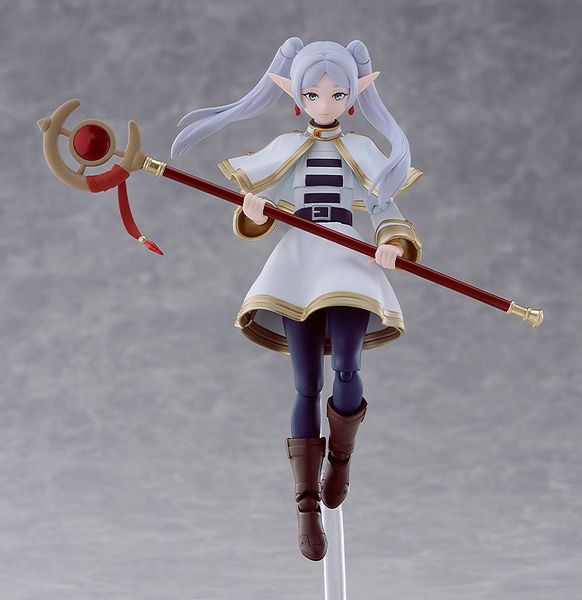
Figma figures, produced by Max Factory (and distributed by GSC), aim for maximum articulation while maintaining realistic, non-chibi proportions. They are the preferred choice for recreating dynamic action scenes.
| Feature | Description |
| Size | Medium (approximately 13 to 15 cm in height), similar to standard action figures. |
| Articulation | Extreme. They feature numerous ball-and-socket and hinge joints, allowing complex poses for fighting, running, or flying. |
| Customization | They come with numerous pairs of hands, weapons, attack effects, and one or two alternative faceplates. Their primary focus is the action pose. |
| Purpose | Collecting focused on playability, dynamic posability, and recreating battles. |
3. Scale Figures (The Static Fidelity)
Scale figures are the premium option in collecting. Their main objective is fidelity and dynamic representation in a fixed pose. They are measured in fractions of the character's real size (e.g., $1/8$, $1/7$, $1/4$).
| Feature | Description |
| Size | Varies significantly (e.g., a $1/7$ statue can measure 25-30 cm). They are the largest and most striking figures. |
| Articulation | None. The pose is fixed and permanent. |
| Customization | Minimal or none. The value lies in the sculpt and paintwork. The level of detail in the hair, cloth, and expression is unmatched. |
| Purpose | High-quality, static display. They are investment pieces and the focal point of most collections. |
Quick Comparison: Nendoroid, Figma, and Scale
| Aspect | Nendoroid | Figma | Scale Figures |
| Style | Chibi/Super Deformed | Realistic | Realistic/Hyper-realistic |
| Articulation | High (limited by SD style) | Maximum (for action) | None (fixed pose) |
| Price | Low to Moderate ($40 - $70 USD) | Moderate to High ($70 - $120 USD) | High to Premium ($150 - $400+ USD) |
| Space | Minimal | Moderate | Maximum |
| Key Feature | Interchangeable faces and cuteness | Dynamic posing and playability | Sculpting and paint detail |


Conclusion: Which Is the Best Option?
-
If you prioritize charm, cuteness, and the ability to change expressions without taking up much space, choose Nendoroid.
-
If you want to recreate complex action poses and battles with accurate proportions, choose Figma.
-
If you seek maximum fidelity, artistic detail, and an impressive centerpiece for display (and your budget allows), choose a Scale Figure.
Sponsored
Categories
Read More
Definitive Guide: JoJo's Bizarre Adventure Watch Order (Complete Timeline) JoJo's Bizarre Adventure is one of the most influential franchises in the history of manga and anime. Written by Hirohiko Araki, the series is distinguished by an unusual narrative structure: instead of following a single protagonist, the story is divided into "Parts." Each Part features a new protagonist...
It is a frequent question in the anime community: How many episodes does One Piece have? Is it the longest? The short answer is: No, One Piece is not the longest anime in history. Although the Luffy anime has surpassed 1100 episodes, the throne of the most extensive anime belongs to a category of short-format Japanese series with near-daily broadcasts that have been on the air continuously for...
The Damsel in Distress (DiD) trope, where the primary narrative function of a female character is to be rescued by a male hero, has long been a pillar of fiction. However, anime and manga have been pioneers in deconstructing this concept, offering female characters who are not only strong but leaders, strategists, and active agents of their own destiny. This article celebrates the heroines who...
Anime was built on the foundation of hand-drawn 2D animation. When 3D (CGI) makes its appearance, the fan reaction is often one of deep rejection. The aversion stems from a fundamental problem: the inability of low-budget 3D to blend with the visual style and narrative timing of traditional animation. Below, we analyze the root of the rejection and the rare exceptions that have proven the...
A Foodie's Guide to Anime: What Are Onigiri, Ramen, and Taiyaki? Food in anime is often animated with a level of detail that makes it look more delicious than real food. From characters meticulously preparing bento boxes to scenes of them devouring bowls of noodles, food is a pillar of the narrative. For new viewers, three foods appear constantly, acting as key cultural items: Onigiri...