





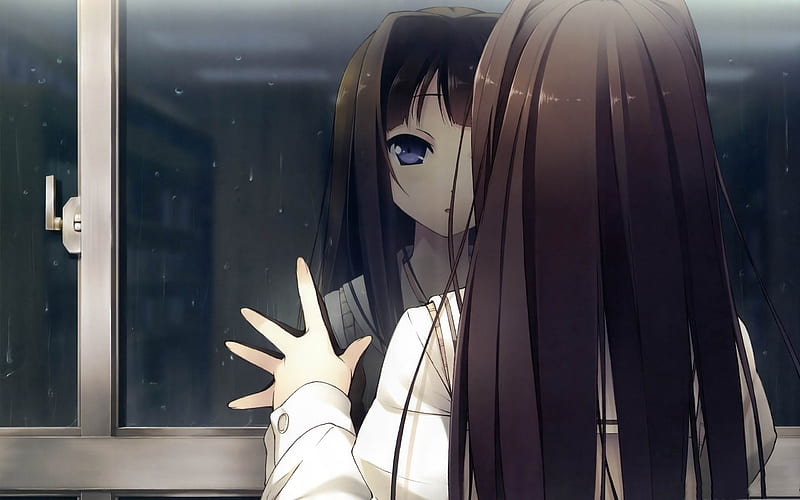
The “window seat and last row” trope is a near-universal visual convention in the school anime genre. Whether in slice-of-life or shonen, directors invariably position the protagonist, often an introverted or “chosen” character, in the far right corner of the classroom. This placement is no accident; deliberate choices in visual composition, narrative necessity, and production efficiency dictate this setup.
1. Narrative Function: Controlled Isolation
The protagonist’s physical location in the window seat carries an immediate meaning that the viewer assimilates without dialogue.
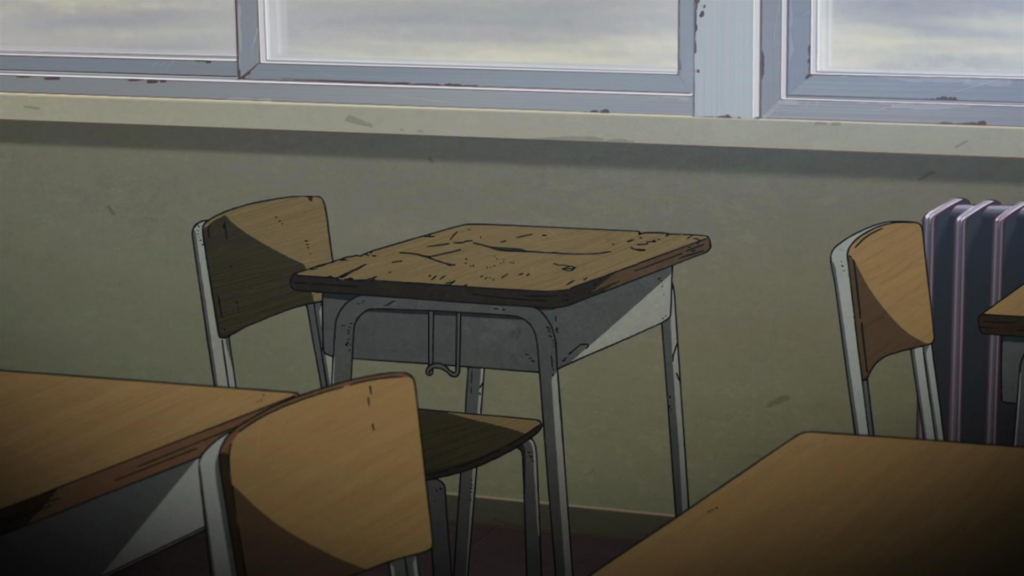
The Observer and Distancing
The last row seat positions the protagonist as someone who is apart from the central classroom action. This communicates social or psychological distancing. The character is, in essence, an observer, allowing the viewer to see school life through their unique and often critical gaze.
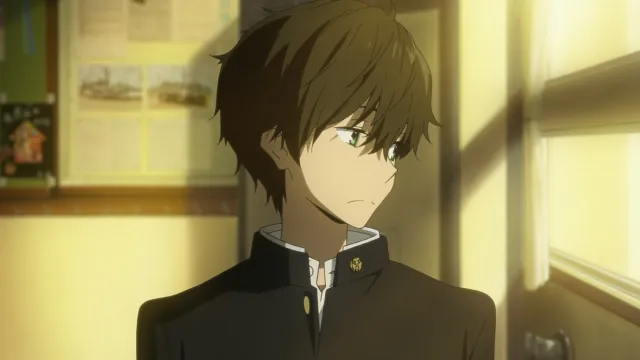
Connection to the Outside World
Looking through the window is the fastest visual shorthand for introspection, boredom, or longing. The window acts as a portal, symbolizing the outside world, adventure, personal problems, or a future beyond the monotony of school. It allows for smooth narrative transitions from reality to the character’s mind.
2. Visual and Cinematic Function: Composition and Light
From a visual composition perspective, the window seat is the most advantageous position for a main character.
The Rule of Thirds
The rectangular window frame perfectly applies the rule of thirds, a technique that makes shots visually more appealing. The frame captures the character against the exterior background (sky, trees), maintaining dramatic focus on the protagonist’s expressions.

Dramatic Lighting and Silhouettes
The strongest light source in a typical classroom is the window. This allows the animation director to play with light and shadow:
- Silhouettes: Bright light can turn the character into a silhouette against the background, emphasizing mystery or melancholy without requiring complex facial animation.
- Depth: Natural lighting helps differentiate the character from the classroom background, creating depth of field.
3. Technical Reason: Animation Efficiency
The most pragmatic justification for the trope ties directly to efficiency in the animation production process.
Resource Saving on Static Backgrounds
Anime relies on the reuse of static and detailed background shots to save time. The protagonist sitting by the window:
- Reduces Traffic: Minimizes interaction with other students.
- Keeps Background Fixed: The character covers the classroom background, so artists need to draw the room less frequently.
- Facilitates Focus: The depth of field blur on the window allows the art team to concentrate detail only on the foreground.
Conclusion
The protagonist in the window seat is a design convention that has solidified into a trope. It doesn’t necessarily symbolize marginalization; instead, it provides an efficient solution. It instantly communicates the character’s “observer” status, enables high-quality lighting, and optimizes the animation production workflow.







[…] audiences search for a “sad anime movie,” the default recommendation is almost always Studio Ghibli’s Grave of the Fireflies. While it […]
[…] the concept of a Shared Universe is popularly associated with Western comics, large anime franchises have been interweaving timelines and secondary narratives for decades. In this medium, […]
[…] Megane in anime have been the uniform of the strategist. They represent the ability to observe, analyze, and […]
[…] Number 5 is Miyu Suzuki from the romantic comedy You and I are Polar Opposites. She moves down one position but remains high on the list. Her loud […]
[…] modern heroine in anime not only breaks the Damsel in Distress trope but replaces it with multi-dimensional archetypes. By […]